Tag: technology

  • Cebu Air’s Underlying Momentum Is Real — and It Shows

    Cebu Air’s Underlying Momentum Is Real — and It Shows

    Start with the basics. For the nine months to September 30, 2025, CEB logged ₱87.6 billion in revenue, up 18% year‑on‑year. Passenger sales rose 17% to ₱59.7 billion on broad‑based demand recovery; cargo accelerated 30% to ₱5.2 billion; and ancillary revenues—those high‑margin add‑ons like baggage, seat selection, and bundles—climbed 17% to ₱22.8 billion. The top‑line story isn’t just about reopening—it’s about retention and monetization.

    More telling than growth is quality. Operating costs did rise (+16% to ₱79.8 billion), as you’d expect with more flights and a bigger fleet. But the key heavy lines behaved: flying operations were essentially flat (+1%), thanks to lower fuel prices offsetting higher consumption and crew counts; depreciation (+21%) and aircraft/traffic servicing (+41%) reflect capacity normalization rather than inefficiency; and short‑term lease costs fell sharply (−80%), signposting better asset planning. Net result: operating income of ₱7.8 billion, up 37%

    The best lens for “underlying momentum” is CEB’s pre‑tax core net income, which filters out outsized, non‑recurring items. On that basis, CEB delivered ₱2.9 billiondouble last year’s ₱1.45 billion. Pair that with an EBITDA of ₱22.2 billion and a 25.3% EBITDA margin (up from 23.6%), and you see a business extracting more cash profit per peso of revenue even as it rebuilds capacity. Efficiency metrics corroborate the trend: Cost per ASK ticked down to ₱3.05 from ₱3.10, with the seat load factor steady at 84.8%—proof that routes and pricing are holding. 

    Of course, the reported net income of ₱9.47 billion (+181%) needs context. Two items gave the year a big glow: ₱5.99 billion booked as other income for five free‑of‑charge Pratt & Whitney GTF engines—a fair‑value recognition tied to industry‑wide AOG mitigation—and ₱226 million from remeasurement on the step‑acquisition of 1Aviation (ground handling), which moved from joint venture to subsidiary. These don’t recur, and the market should normalize them. But they also matter: the engines improve near‑term fleet availability, while consolidating 1Aviation strengthens service control and integration. (Source: CEB Form 17‑Q, 9M 2025)

    If there’s a headwind, it’s below the line. Financing costs rose 17% to ₱5.6 billion as deliveries and lease liabilities scaled, and foreign‑exchange losses hit ₱1.25 billion on peso depreciation versus USD and JPY—the currency mix in aviation is stubborn. Yet even here, the interest coverage ratio improved to 1.57x (from 1.32x), reflecting stronger earnings capacity to carry debt and leases. 

    Balance‑sheet optics have turned decisively better. Equity grew to ₱16.1 billion (from ₱10.0 billion), and book value per common share jumped to ₱21.00 (from ₱7.18), driven by profits despite an active buyback and a ₱2.82 billion dividend to preferred shareholders. On liquidity, the current ratio is a low 0.53x, and current liabilities still exceed current assets by ~₱30 billion—that’s the nature of airline working capital. But cash generation is the counterweight: ₱15.41 billion net cash from operations year‑to‑date, ₱4.78 billion net inflows on investing (proceeds and PDP/security‑deposit refunds, net of capex), and deliberate ₱24.46 billion outflows in financing (debt/lease repayments, treasury purchases, dividends). The company is using cash to de‑risk.

    Operationally, the platform is deeper and more resilient. CEB now flies 98 aircraft with an average age of ~6.1 years, across 82 domestic and 42 international routes with roughly 2,700 weekly flights. The AirSWIFT acquisition broadens leisure connectivity (El Nido and other tourist nodes), while 1Aviation consolidation tightens ground operations across thirty‑plus airports. Those moves aren’t mere trophies; they reinforce the commercial engine—better schedule reliability, more ancillary throughput, and improved customer experience that sustains yield. 

    There are risks worth watching. Fuel and FX remain volatile, and hedging is prudently modest; heavy maintenance accruals (₱5.68 billion HMV YTD) and return condition provisions (₱0.83 billion) underline a busy engineering calendar as utilization rises; lease liabilities are substantial (₱116.84 billion), keeping discipline front‑and‑center. Still, the levers are visible: route profitability, ancillary monetization, tighter ground operations, normalized lease mix, and efficiency at scale. 

    Bottom line: If you’re trying to decide whether CEB’s 2025 bounce is cosmetic or structural, the core tells the story. Pre‑tax core earnings doubledmargins expandedCASK declined, and cash flows are funding de‑risking, not just growth. The headline numbers benefited from exceptional items, yes—but the business beneath them is sturdier than it was a year ago. For investors, valuation should key off normalized earnings and EV/EBITDA, but the direction of travel is favorable: an airline that’s earning more per flight and per customer, with a wider network, better integration, and improving balance‑sheet optics.

    In a sector where momentum can be fleeting, Cebu Air’s looks real—and increasingly repeatable.

    We’ve been blogging for free. If you enjoy our content, consider supporting us!

  • Century Pacific Food Posts Solid Q3 Growth, But Working Capital and Margin Pressures Loom

    Century Pacific Food Posts Solid Q3 Growth, But Working Capital and Margin Pressures Loom

    Century Pacific Food, Inc. (PSE: CNPF), one of the country’s leading branded food manufacturers, reported strong third-quarter results, with consolidated revenues and earnings accelerating on the back of robust branded segment growth. However, the company faces emerging financial and operational risks tied to margin compression, working capital strain, and export volatility.

    Earnings Surge Amid Branded Segment Strength

    For the nine months ended September 30, 2025, CNPF posted ₱61.79 billion in revenues, up 8.5% year-on-year, while net income rose 9.6% to ₱5.78 billion. Earnings per share climbed to ₱1.63 from ₱1.49 last year.
    Third-quarter performance was even stronger, with revenues jumping 14.9% to ₱22.07 billion and net income up 14.8% to ₱1.89 billion, signaling accelerating momentum in branded categories such as marine, meat, and dairy.

    Management attributed the gains to double-digit volume growth in branded products and improved consumer purchasing power amid stable inflation. Meanwhile, OEM exports (tuna and coconut) softened by 5% year-to-date but showed signs of recovery in Q3 as global trade conditions stabilized.


    Risk Areas Identified

    Despite the upbeat earnings, the report reveals several vulnerabilities that investors should monitor:

    1. Working Capital Pressure
      • Trade receivables surged 30% to ₱13.95 billion, while advances to suppliers more than doubled (+118%).
      • Operating cash flow fell sharply to ₱2.97 billion from ₱4.87 billion last year, reflecting heavier working capital requirements.
    2. Margin Sensitivity
      • Gross margin contracted 110 basis points to 25.5%, driven by higher input costs.
      • While operating expenses were trimmed to offset some pressure, commodity price volatility and FX risk remain key threats.
    3. OEM Export Volatility
      • Tuna and coconut exports declined 5% year-to-date, exposing CNPF to global trade uncertainties and demand cycles.
    4. Debt Maturity Concentration
      • Short-term notes payable ballooned to ₱4.02 billion from ₱200 million, with ₱4.0 billion due within 12 months.
      • Although gearing remains low at 0.19x, refinancing risk could rise if liquidity tightens.
    5. Inventory Build-Up
      • Inventories climbed nearly 9% to ₱20.24 billion, extending the cash conversion cycle to 80 days, which could increase exposure to obsolescence and price swings.

    Capital Allocation and Outlook

    CNPF declared ₱1.10 per share in dividends (₱0.55 regular and ₱0.55 special), representing a 61% payout ratio. Capital expenditures reached ₱2.2 billion, including plant upgrades and the acquisition of U.S.-based plant-based brand Loma Linda, reinforcing its health and wellness portfolio.

    Looking ahead, management will need to balance growth investments with tighter working capital discipline and margin protection. The company’s ability to manage input cost volatility, normalize cash flows, and sustain branded momentum will be critical as it navigates global trade uncertainties and domestic inflation risks.


    Bottom Line: Century Pacific Food delivered strong Q3 earnings and revenue growth, but rising working capital needs, margin compression, and short-term debt obligations underscore the importance of disciplined financial management in the coming quarters.

    SUBSCRIBE TO SUPPORT FREE & INDEPENDENT RESEARCH

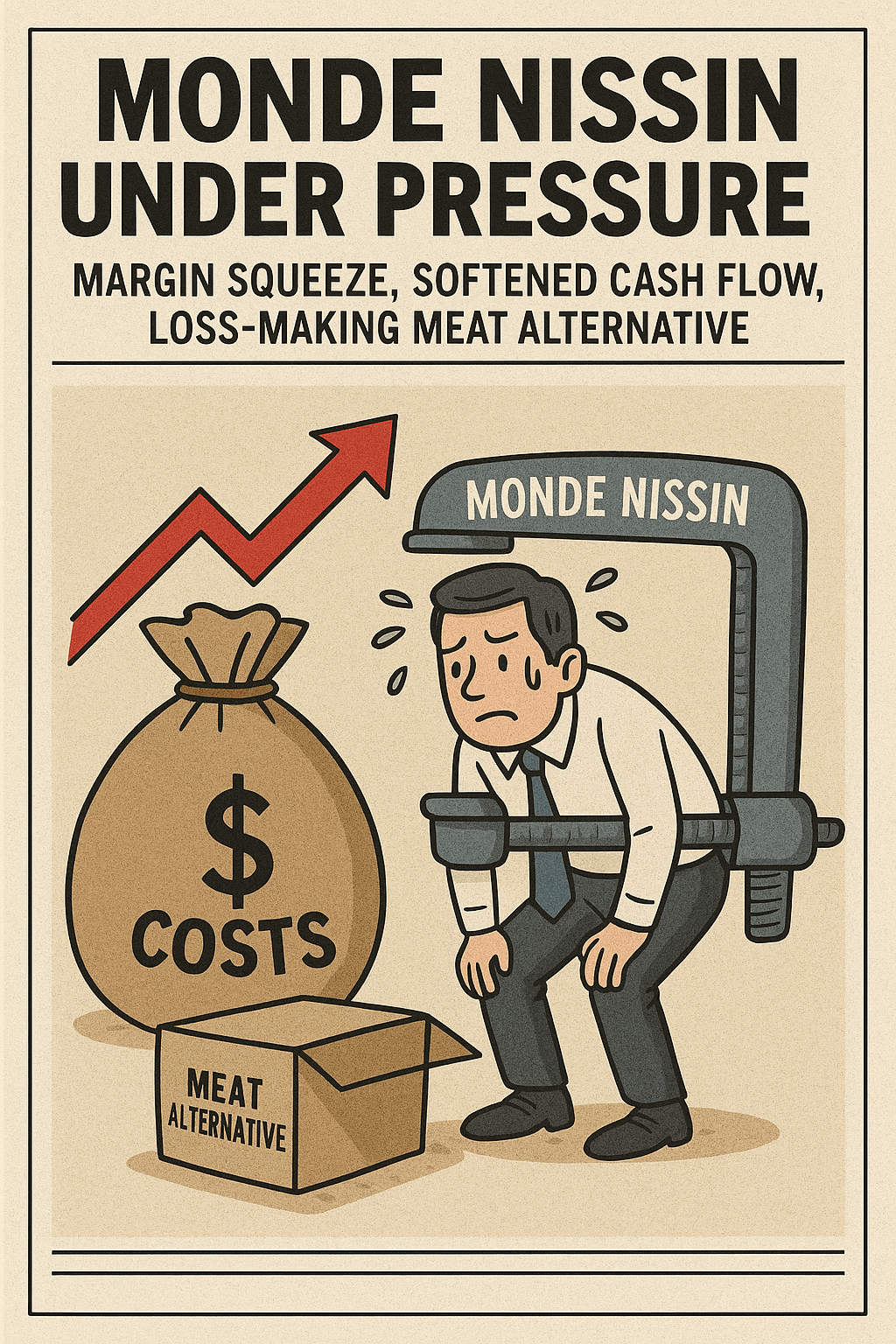
  • Monde Nissin Faces Margin Squeeze Amid Rising Input Costs; Operating Cash Flow Softens, Meat Alternative Still in the Red

    Monde Nissin Faces Margin Squeeze Amid Rising Input Costs; Operating Cash Flow Softens, Meat Alternative Still in the Red

    Monde Nissin Corporation reported continued pressure on its profit margins for the first nine months of 2025 as soaring edible oil prices weighed on its core branded food business, even as net income rose on cost initiatives and foreign exchange gains.

    The company’s gross margin slipped to 33.3% from 34.9% a year earlier, with its Asia-Pacific Branded Food & Beverage segment posting a sharper decline to 34.8%. Management attributed the drop to higher palm and coconut oil costs, which offset stable wheat prices and early benefits from price adjustments and cost-saving measures.

    “Commodity inflation remains a key headwind,” the company said in its quarterly filing, noting that while raw material requirements for 2025 have been secured, volatility could persist into 2026.

    Despite the margin squeeze, Monde Nissin booked a 9.6% increase in net income to ₱6.67 billion, supported by lower financing costs and a swing to foreign exchange gains. However, cash generation showed signs of strain.

    Operating cash flow for the nine-month period edged down to ₱8.74 billion from ₱8.91 billion last year, as inventories climbed 6.3% to ₱9.48 billion and prepayments surged nearly 40%, tying up liquidity. The company also settled trust receipt payables early to manage interest and currency exposure, further reducing cash reserves.

    Meanwhile, Monde’s Meat Alternative business, which includes the Quorn brand, remained loss-making despite signs of improvement. The segment posted a ₱1.04 billion net loss year-to-date, narrower than last year’s ₱2.05 billion deficit, as supply chain transformation and cost efficiencies lifted gross margin to 25% from 21.4%. UK retail sales stabilized in the second and third quarters, but category softness and lower production volumes continue to weigh on performance.

    Monde Nissin closed the quarter with ₱14.45 billion in cash, a debt-to-equity ratio of 0.34x, and announced a ₱0.16 per share dividend payable in January 2026. Analysts say the group’s strong balance sheet provides a buffer, but warn that prolonged commodity volatility, working capital pressures, and ongoing losses in the Meat Alternative segment could weigh on future cash flows.

    SUBSCRIBE TO SUPPORT FREE & INDEPENDENT RESEARCH

  • Retail Giant Puregold Posts Solid Growth, But Expansion Risks Loom

    Retail Giant Puregold Posts Solid Growth, But Expansion Risks Loom

    Puregold Price Club, Inc. (PGOLD) has once again demonstrated its resilience in the Philippine retail landscape, posting a net income of ₱7.3 billion for the first nine months of 2025, up 5.6% year-on-year. Sales surged 10.6% to ₱168.1 billion, powered by aggressive store expansion and steady same-store sales growth. Yet behind the headline numbers, a closer look at the company’s latest SEC filing reveals operational pressure points that could shape its trajectory into 2026.


    The Good News: Scale and Margins Hold

    Puregold’s top line benefited from the full-year impact of 2024 openings and 174 new stores launched in 2025, including one S&R warehouse. Same-store sales growth was healthy: Puregold +4.8%S&R +5.4%, signaling consumer stickiness despite inflationary headwinds.

    Gross margin improved to 18.7% from 18.2%, thanks to supplier rebates and scale efficiencies. Operating income rose 8.2% to ₱11.3 billion, though operating margin slipped slightly to 6.7%. Net margin eased to 4.3%, reflecting higher financing costs and foreign exchange losses.


    The Pressure Points

    While management asserts “no known material uncertainties,” the numbers tell a nuanced story:

    • Opex Surge: Operating expenses jumped 16.5%, outpacing sales growth. Expansion costs—manpower, utilities, depreciation—are biting into margins.
    • Lease-Heavy Model: Lease liabilities ballooned to ₱49.7 billion, underscoring Puregold’s reliance on rented space. Gains from lease terminations hint at active pruning but also raise questions about site-selection discipline.
    • S&R Basket Conundrum: Traffic soared 15.8%, yet average basket size fell 9%. More trips, smaller baskets—a trend that could pressure profitability if not reversed during the holiday peak.
    • Working Capital Strain: Inventory climbed 16.1% to ₱34.2 billion, while cash dropped 28.7%. Liquidity remains strong (current ratio 3.22x), but cash conversion will be critical in Q4.
    • Finance and FX Costs: Other charges rose 25%, driven by interest and a ₱288 million FX loss, partially offset by lease termination gains.

    Governance and Related-Party Exposure

    The report also flags significant related-party leases, totaling ₱5.7 billion. While common in Philippine retail, such arrangements warrant scrutiny for pricing fairness and renewal risk.


    Investor Takeaways

    Puregold’s fundamentals remain solid: strong brand equity, scale advantages, and liquidity buffers. But the cost discipline challenge is real. Expansion is a double-edged sword—fueling growth while amplifying execution risk. For investors, the Q4 holiday season will be the litmus test: can Puregold convert inventory into cash, normalize S&R baskets, and defend margins?

    If it succeeds, PGOLD stays a defensive play in consumer staples. If not, 2026 could bring margin compression and a rethink of its lease-heavy growth model.


    Bottom Line: Puregold is still a growth story—but one that demands sharper cost control and strategic agility. In retail, size matters, but efficiency matters more. 

    Subscribe to Support Free & Independent Research

  • Figaro Culinary Group Faces Operational Strains Amid Expansion Drive

    Figaro Culinary Group Faces Operational Strains Amid Expansion Drive

    Figaro Culinary Group, Inc. (FCG), the operator behind Angel’s Pizza and Figaro Coffee, reported steady revenues for fiscal year ending June 30, 2025, but its latest audited financial statements reveal mounting operational challenges that could weigh on future performance.

    Margins Under Pressure
    Despite a 4.1% revenue increase to ₱5.67 billion, gross margins slipped to 44.7% from 45.9% a year earlier. Rising delivery commissions—up 28% to ₱375.2 million—and higher store overhead costs contributed to the squeeze. Advertising spend was cut by nearly 29%, helping operating margins, but analysts warn that prolonged marketing pullbacks could hurt brand momentum.

    Debt-Fueled Expansion Raises Financing Costs
    The company’s aggressive store rollout drove property and equipment assets up 54% to ₱3.89 billion. However, this expansion came at a cost: loans surged to ₱1.52 billion, pushing finance expenses to ₱105.2 million, more than double last year’s figure. Net income remained flat at ₱629.6 million, signaling that interest costs are eroding profitability gains.

    Cash Flow and Liquidity Concerns
    Operating cash flow fell 19% to ₱1.14 billion, while capital expenditures ballooned to ₱1.73 billion, resulting in negative free cash flow of roughly ₱743 million. The company relied on fresh borrowings to bridge the gap, raising questions about sustainability if expansion continues at the current pace.

    Franchise and Receivables Risks
    Royalty income plunged to ₱83.3 million from ₱162.6 million, and franchise deposits fell to zero, suggesting possible weakness in the franchising model. Trade receivables climbed 22% to ₱199.9 million, with ₱48.8 million overdue for more than 60 days, yet no impairment provision was recorded.

    Concentration and Lease Exposure
    Angel’s Pizza now accounts for over 70% of total sales, underscoring brand concentration risk. Meanwhile, prepaid rent soared to ₱47.7 million, and lease extensions remain non-binding, exposing the group to potential occupancy uncertainties.

    What’s Next?
    Industry observers suggest FCG must recalibrate its growth strategy, tighten credit controls, and renegotiate lease terms to safeguard liquidity. While its flagship pizza brand continues to dominate, diversification and operational discipline will be critical to sustaining long-term shareholder value.

    Subscribe to Support Independent Research

  • SSI Group’s Nine-Month Profit Plunges 49% Amid Rising Operating Costs

    SSI Group’s Nine-Month Profit Plunges 49% Amid Rising Operating Costs

    SSI Group, Inc. reported a sharp decline in profitability for the nine months ended September 30, 2025, as operating expenses surged despite flat revenue growth.

    The specialty retailer posted ₱639.8 million in net income, down 49.3% from ₱1.26 billion in the same period last year. Third-quarter earnings fell even steeper, dropping 65% to ₱188.1 million.

    Sales remained largely unchanged, inching up 0.7% to ₱20.32 billion, while gross profit improved slightly to ₱9.08 billion, with margins rising to 44.7% from 44.2%. However, operating income plunged 44.9% to ₱914 million as expenses ballooned.

    “The increase in costs was driven by store network expansion and technology investments,” SSI said in its quarterly filing.

    Operating expenses climbed 12.4% to ₱8.18 billion, fueled by higher rent, depreciation, and personnel costs linked to a 13.6% increase in selling space and the rollout of SAP and ETP enterprise systems. Selling and distribution costs rose to ₱6.58 billion, while general and administrative expenses jumped 17.4% to ₁.60 billion.

    The company opened 17 new stores during the quarter, bringing its total to 613 outlets nationwide, and expanded its brand portfolio to 103 names. E-commerce contributed ₱1.57 billion, or 7.7% of total sales.

    SSI ended the period with ₱2.78 billion in cash, down from ₱5.14 billion at year-end 2024, after spending ₱1.20 billion on capital expenditures, paying ₱503.6 million in dividends, and repurchasing shares worth ₱50.4 million.

    Despite the earnings slump, SSI maintained a net cash position of ₱1.39 billion and a current ratio of 2.11, signaling adequate liquidity ahead of the holiday season, traditionally its strongest quarter.


    Outlook / Investor Takeaway

    • Holiday Quarter Critical: SSI’s inventory build to ₱13.15 billion positions it for peak season sales, but execution risk is high. Strong sell-through and markdown discipline will be key to converting stock into cash.
    • Margin Recovery Hinges on Cost Control: ERP transition costs and store expansion drove operating margin down to 4.5%. Normalization of G&A and leveraging new stores will determine if margins rebound in Q4.
    • Liquidity Cushion Intact: Net cash and low leverage (Debt/Equity at 0.08) provide breathing room, but free cash flow needs improvement after negative operating cash flow in 9M25.
    • Watch Luxury Segment: Luxury and Bridge sales fell 3.8%, signaling discretionary weakness. Performance in this category during the holidays will be a bellwether for 2026.
    • Valuation Implication: With EPS at ₱0.19 (vs ₱0.38 last year), investors may reassess growth expectations. Near-term upside depends on holiday performance and cost discipline.