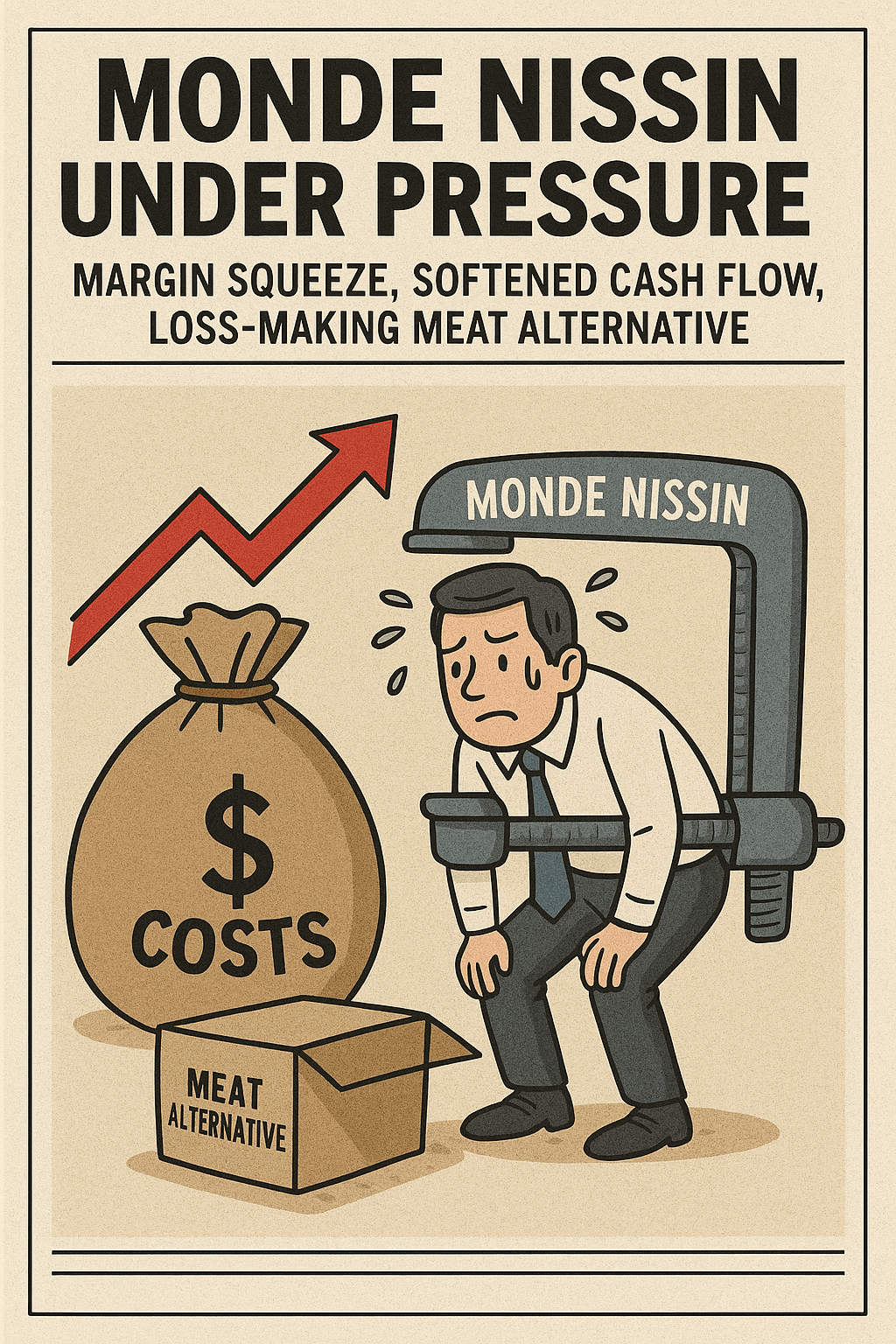
Monde Nissin Faces Margin Squeeze Amid Rising Input Costs; Operating Cash Flow Softens, Meat Alternative Still in the Red

Monde Nissin Corporation reported continued pressure on its profit margins for the first nine months of 2025 as soaring edible oil prices weighed on its core branded food business, even as net income rose on cost initiatives and foreign exchange gains.

The company’s gross margin slipped to 33.3% from 34.9% a year earlier, with its Asia-Pacific Branded Food & Beverage segment posting a sharper decline to 34.8%. Management attributed the drop to higher palm and coconut oil costs, which offset stable wheat prices and early benefits from price adjustments and cost-saving measures.

“Commodity inflation remains a key headwind,” the company said in its quarterly filing, noting that while raw material requirements for 2025 have been secured, volatility could persist into 2026.

Despite the margin squeeze, Monde Nissin booked a 9.6% increase in net income to ₱6.67 billion, supported by lower financing costs and a swing to foreign exchange gains. However, cash generation showed signs of strain.

Operating cash flow for the nine-month period edged down to ₱8.74 billion from ₱8.91 billion last year, as inventories climbed 6.3% to ₱9.48 billion and prepayments surged nearly 40%, tying up liquidity. The company also settled trust receipt payables early to manage interest and currency exposure, further reducing cash reserves.

Meanwhile, Monde’s Meat Alternative business, which includes the Quorn brand, remained loss-making despite signs of improvement. The segment posted a ₱1.04 billion net loss year-to-date, narrower than last year’s ₱2.05 billion deficit, as supply chain transformation and cost efficiencies lifted gross margin to 25% from 21.4%. UK retail sales stabilized in the second and third quarters, but category softness and lower production volumes continue to weigh on performance.

Monde Nissin closed the quarter with ₱14.45 billion in cash, a debt-to-equity ratio of 0.34x, and announced a ₱0.16 per share dividend payable in January 2026. Analysts say the group’s strong balance sheet provides a buffer, but warn that prolonged commodity volatility, working capital pressures, and ongoing losses in the Meat Alternative segment could weigh on future cash flows.

SUBSCRIBE TO SUPPORT FREE & INDEPENDENT RESEARCH

Related Posts

Monde Nissin Faces Margin Squeeze Amid Rising Input Costs; Operating Cash Flow Softens, Meat Alternative Still in the Red

Monde Nissin Corporation reported continued pressure on its profit margins for the first nine months of 2025 as soaring edible oil prices weighed on its core branded food business, even as net income rose on cost initiatives and foreign exchange gains.

The company’s gross margin slipped to 33.3% from 34.9% a year earlier, with its Asia-Pacific Branded Food & Beverage segment posting a sharper decline to 34.8%. Management attributed the drop to higher palm and coconut oil costs, which offset stable wheat prices and early benefits from price adjustments and cost-saving measures.

“Commodity inflation remains a key headwind,” the company said in its quarterly filing, noting that while raw material requirements for 2025 have been secured, volatility could persist into 2026.

Despite the margin squeeze, Monde Nissin booked a 9.6% increase in net income to ₱6.67 billion, supported by lower financing costs and a swing to foreign exchange gains. However, cash generation showed signs of strain.

Operating cash flow for the nine-month period edged down to ₱8.74 billion from ₱8.91 billion last year, as inventories climbed 6.3% to ₱9.48 billion and prepayments surged nearly 40%, tying up liquidity. The company also settled trust receipt payables early to manage interest and currency exposure, further reducing cash reserves.

Meanwhile, Monde’s Meat Alternative business, which includes the Quorn brand, remained loss-making despite signs of improvement. The segment posted a ₱1.04 billion net loss year-to-date, narrower than last year’s ₱2.05 billion deficit, as supply chain transformation and cost efficiencies lifted gross margin to 25% from 21.4%. UK retail sales stabilized in the second and third quarters, but category softness and lower production volumes continue to weigh on performance.

Monde Nissin closed the quarter with ₱14.45 billion in cash, a debt-to-equity ratio of 0.34x, and announced a ₱0.16 per share dividend payable in January 2026. Analysts say the group’s strong balance sheet provides a buffer, but warn that prolonged commodity volatility, working capital pressures, and ongoing losses in the Meat Alternative segment could weigh on future cash flows.

SUBSCRIBE TO SUPPORT FREE & INDEPENDENT RESEARCH

Related Posts

Comments

Leave a comment

Monde Nissin Faces Margin Squeeze Amid Rising Input Costs; Operating Cash Flow Softens, Meat Alternative Still in the Red

Monde Nissin Corporation reported continued pressure on its profit margins for the first nine months of 2025 as soaring edible oil prices weighed on its core branded food business, even as net income rose on cost initiatives and foreign exchange gains.

The company’s gross margin slipped to 33.3% from 34.9% a year earlier, with its Asia-Pacific Branded Food & Beverage segment posting a sharper decline to 34.8%. Management attributed the drop to higher palm and coconut oil costs, which offset stable wheat prices and early benefits from price adjustments and cost-saving measures.

“Commodity inflation remains a key headwind,” the company said in its quarterly filing, noting that while raw material requirements for 2025 have been secured, volatility could persist into 2026.

Despite the margin squeeze, Monde Nissin booked a 9.6% increase in net income to ₱6.67 billion, supported by lower financing costs and a swing to foreign exchange gains. However, cash generation showed signs of strain.

Operating cash flow for the nine-month period edged down to ₱8.74 billion from ₱8.91 billion last year, as inventories climbed 6.3% to ₱9.48 billion and prepayments surged nearly 40%, tying up liquidity. The company also settled trust receipt payables early to manage interest and currency exposure, further reducing cash reserves.

Meanwhile, Monde’s Meat Alternative business, which includes the Quorn brand, remained loss-making despite signs of improvement. The segment posted a ₱1.04 billion net loss year-to-date, narrower than last year’s ₱2.05 billion deficit, as supply chain transformation and cost efficiencies lifted gross margin to 25% from 21.4%. UK retail sales stabilized in the second and third quarters, but category softness and lower production volumes continue to weigh on performance.

Monde Nissin closed the quarter with ₱14.45 billion in cash, a debt-to-equity ratio of 0.34x, and announced a ₱0.16 per share dividend payable in January 2026. Analysts say the group’s strong balance sheet provides a buffer, but warn that prolonged commodity volatility, working capital pressures, and ongoing losses in the Meat Alternative segment could weigh on future cash flows.

SUBSCRIBE TO SUPPORT FREE & INDEPENDENT RESEARCH

Related Posts

Comments

Leave a comment