Retail Giant Puregold Posts Solid Growth, But Expansion Risks Loom

Puregold Price Club, Inc. (PGOLD) has once again demonstrated its resilience in the Philippine retail landscape, posting a net income of ₱7.3 billion for the first nine months of 2025, up 5.6% year-on-year. Sales surged 10.6% to ₱168.1 billion, powered by aggressive store expansion and steady same-store sales growth. Yet behind the headline numbers, a closer look at the company’s latest SEC filing reveals operational pressure points that could shape its trajectory into 2026.


The Good News: Scale and Margins Hold

Puregold’s top line benefited from the full-year impact of 2024 openings and 174 new stores launched in 2025, including one S&R warehouse. Same-store sales growth was healthy: Puregold +4.8%S&R +5.4%, signaling consumer stickiness despite inflationary headwinds.

Gross margin improved to 18.7% from 18.2%, thanks to supplier rebates and scale efficiencies. Operating income rose 8.2% to ₱11.3 billion, though operating margin slipped slightly to 6.7%. Net margin eased to 4.3%, reflecting higher financing costs and foreign exchange losses.


The Pressure Points

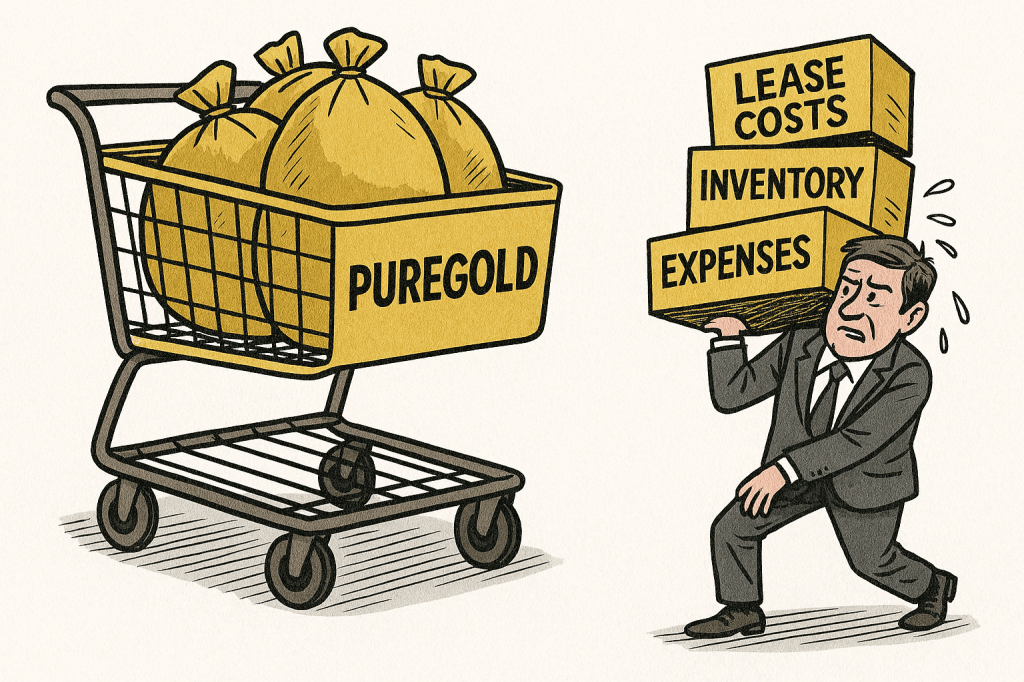
While management asserts “no known material uncertainties,” the numbers tell a nuanced story:

  • Opex Surge: Operating expenses jumped 16.5%, outpacing sales growth. Expansion costs—manpower, utilities, depreciation—are biting into margins.
  • Lease-Heavy Model: Lease liabilities ballooned to ₱49.7 billion, underscoring Puregold’s reliance on rented space. Gains from lease terminations hint at active pruning but also raise questions about site-selection discipline.
  • S&R Basket Conundrum: Traffic soared 15.8%, yet average basket size fell 9%. More trips, smaller baskets—a trend that could pressure profitability if not reversed during the holiday peak.
  • Working Capital Strain: Inventory climbed 16.1% to ₱34.2 billion, while cash dropped 28.7%. Liquidity remains strong (current ratio 3.22x), but cash conversion will be critical in Q4.
  • Finance and FX Costs: Other charges rose 25%, driven by interest and a ₱288 million FX loss, partially offset by lease termination gains.

Governance and Related-Party Exposure

The report also flags significant related-party leases, totaling ₱5.7 billion. While common in Philippine retail, such arrangements warrant scrutiny for pricing fairness and renewal risk.


Investor Takeaways

Puregold’s fundamentals remain solid: strong brand equity, scale advantages, and liquidity buffers. But the cost discipline challenge is real. Expansion is a double-edged sword—fueling growth while amplifying execution risk. For investors, the Q4 holiday season will be the litmus test: can Puregold convert inventory into cash, normalize S&R baskets, and defend margins?

If it succeeds, PGOLD stays a defensive play in consumer staples. If not, 2026 could bring margin compression and a rethink of its lease-heavy growth model.


Bottom Line: Puregold is still a growth story—but one that demands sharper cost control and strategic agility. In retail, size matters, but efficiency matters more. 

Subscribe to Support Free & Independent Research

Related Posts

Retail Giant Puregold Posts Solid Growth, But Expansion Risks Loom

Puregold Price Club, Inc. (PGOLD) has once again demonstrated its resilience in the Philippine retail landscape, posting a net income of ₱7.3 billion for the first nine months of 2025, up 5.6% year-on-year. Sales surged 10.6% to ₱168.1 billion, powered by aggressive store expansion and steady same-store sales growth. Yet behind the headline numbers, a closer look at the company’s latest SEC filing reveals operational pressure points that could shape its trajectory into 2026.


The Good News: Scale and Margins Hold

Puregold’s top line benefited from the full-year impact of 2024 openings and 174 new stores launched in 2025, including one S&R warehouse. Same-store sales growth was healthy: Puregold +4.8%S&R +5.4%, signaling consumer stickiness despite inflationary headwinds.

Gross margin improved to 18.7% from 18.2%, thanks to supplier rebates and scale efficiencies. Operating income rose 8.2% to ₱11.3 billion, though operating margin slipped slightly to 6.7%. Net margin eased to 4.3%, reflecting higher financing costs and foreign exchange losses.


The Pressure Points

While management asserts “no known material uncertainties,” the numbers tell a nuanced story:

  • Opex Surge: Operating expenses jumped 16.5%, outpacing sales growth. Expansion costs—manpower, utilities, depreciation—are biting into margins.
  • Lease-Heavy Model: Lease liabilities ballooned to ₱49.7 billion, underscoring Puregold’s reliance on rented space. Gains from lease terminations hint at active pruning but also raise questions about site-selection discipline.
  • S&R Basket Conundrum: Traffic soared 15.8%, yet average basket size fell 9%. More trips, smaller baskets—a trend that could pressure profitability if not reversed during the holiday peak.
  • Working Capital Strain: Inventory climbed 16.1% to ₱34.2 billion, while cash dropped 28.7%. Liquidity remains strong (current ratio 3.22x), but cash conversion will be critical in Q4.
  • Finance and FX Costs: Other charges rose 25%, driven by interest and a ₱288 million FX loss, partially offset by lease termination gains.

Governance and Related-Party Exposure

The report also flags significant related-party leases, totaling ₱5.7 billion. While common in Philippine retail, such arrangements warrant scrutiny for pricing fairness and renewal risk.


Investor Takeaways

Puregold’s fundamentals remain solid: strong brand equity, scale advantages, and liquidity buffers. But the cost discipline challenge is real. Expansion is a double-edged sword—fueling growth while amplifying execution risk. For investors, the Q4 holiday season will be the litmus test: can Puregold convert inventory into cash, normalize S&R baskets, and defend margins?

If it succeeds, PGOLD stays a defensive play in consumer staples. If not, 2026 could bring margin compression and a rethink of its lease-heavy growth model.


Bottom Line: Puregold is still a growth story—but one that demands sharper cost control and strategic agility. In retail, size matters, but efficiency matters more. 

Subscribe to Support Free & Independent Research

Related Posts

Comments

Leave a comment

Retail Giant Puregold Posts Solid Growth, But Expansion Risks Loom

Puregold Price Club, Inc. (PGOLD) has once again demonstrated its resilience in the Philippine retail landscape, posting a net income of ₱7.3 billion for the first nine months of 2025, up 5.6% year-on-year. Sales surged 10.6% to ₱168.1 billion, powered by aggressive store expansion and steady same-store sales growth. Yet behind the headline numbers, a closer look at the company’s latest SEC filing reveals operational pressure points that could shape its trajectory into 2026.


The Good News: Scale and Margins Hold

Puregold’s top line benefited from the full-year impact of 2024 openings and 174 new stores launched in 2025, including one S&R warehouse. Same-store sales growth was healthy: Puregold +4.8%S&R +5.4%, signaling consumer stickiness despite inflationary headwinds.

Gross margin improved to 18.7% from 18.2%, thanks to supplier rebates and scale efficiencies. Operating income rose 8.2% to ₱11.3 billion, though operating margin slipped slightly to 6.7%. Net margin eased to 4.3%, reflecting higher financing costs and foreign exchange losses.


The Pressure Points

While management asserts “no known material uncertainties,” the numbers tell a nuanced story:

  • Opex Surge: Operating expenses jumped 16.5%, outpacing sales growth. Expansion costs—manpower, utilities, depreciation—are biting into margins.
  • Lease-Heavy Model: Lease liabilities ballooned to ₱49.7 billion, underscoring Puregold’s reliance on rented space. Gains from lease terminations hint at active pruning but also raise questions about site-selection discipline.
  • S&R Basket Conundrum: Traffic soared 15.8%, yet average basket size fell 9%. More trips, smaller baskets—a trend that could pressure profitability if not reversed during the holiday peak.
  • Working Capital Strain: Inventory climbed 16.1% to ₱34.2 billion, while cash dropped 28.7%. Liquidity remains strong (current ratio 3.22x), but cash conversion will be critical in Q4.
  • Finance and FX Costs: Other charges rose 25%, driven by interest and a ₱288 million FX loss, partially offset by lease termination gains.

Governance and Related-Party Exposure

The report also flags significant related-party leases, totaling ₱5.7 billion. While common in Philippine retail, such arrangements warrant scrutiny for pricing fairness and renewal risk.


Investor Takeaways

Puregold’s fundamentals remain solid: strong brand equity, scale advantages, and liquidity buffers. But the cost discipline challenge is real. Expansion is a double-edged sword—fueling growth while amplifying execution risk. For investors, the Q4 holiday season will be the litmus test: can Puregold convert inventory into cash, normalize S&R baskets, and defend margins?

If it succeeds, PGOLD stays a defensive play in consumer staples. If not, 2026 could bring margin compression and a rethink of its lease-heavy growth model.


Bottom Line: Puregold is still a growth story—but one that demands sharper cost control and strategic agility. In retail, size matters, but efficiency matters more. 

Subscribe to Support Free & Independent Research

Related Posts

Comments

Leave a comment